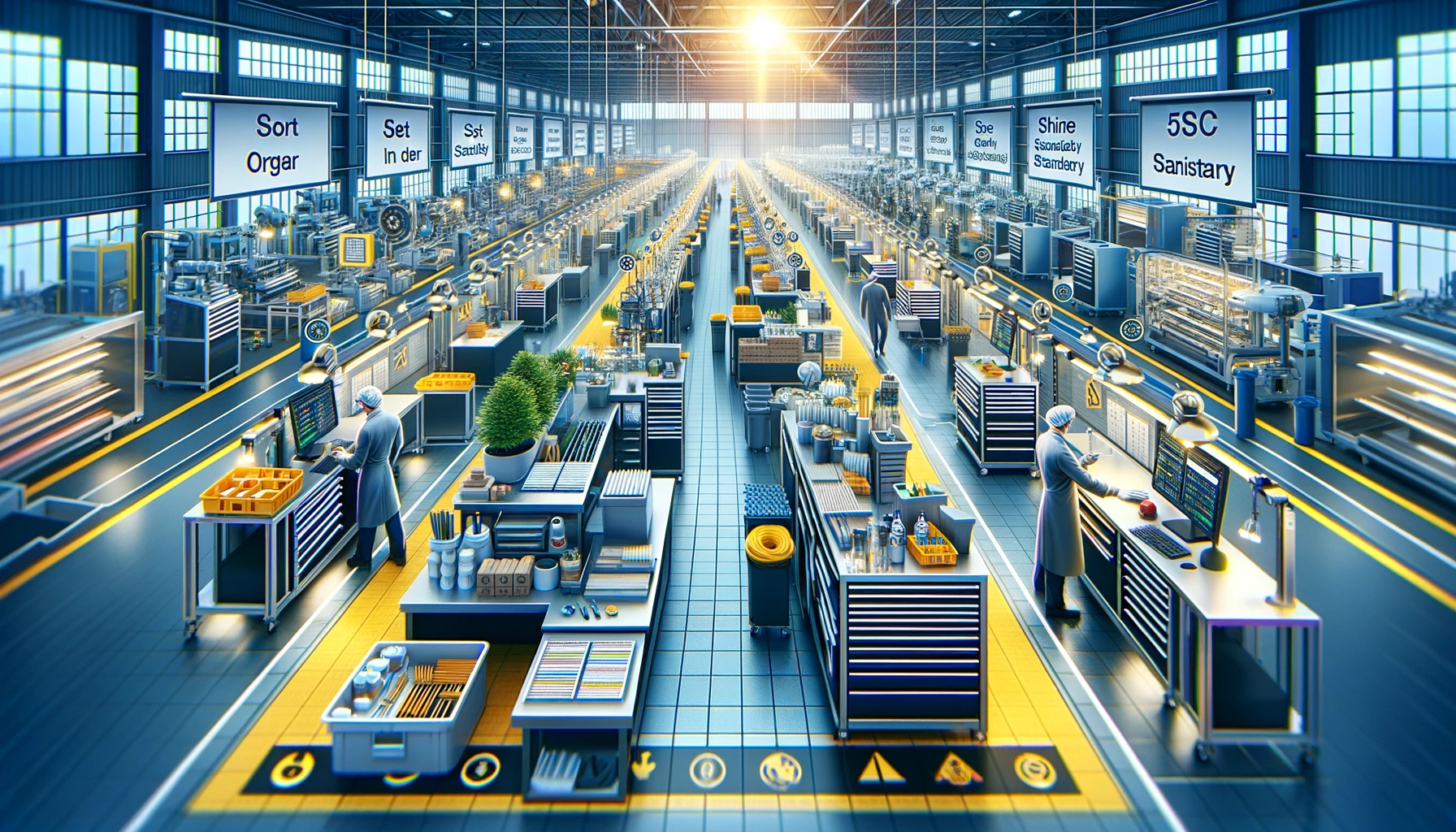
In the realm of manufacturing, the 5S methodology stands as a cornerstone for operational excellence. Originating from Japan, the principles of Sort, Set in order, Shine, Standardize, and Sustain provide a systematic approach to organize workplaces for efficiency and effectiveness. This guide dives into adapting each principle to the production environment, aiming to optimize operations, improve safety, and boost productivity.
Understanding the 5S Principles in Production
- Sort (Seiri): Eliminating unnecessary tools, parts, and instructions.
- Set in Order (Seiton): Arranging necessary items so they are easily accessible.
- Shine (Seiso): Cleaning the work area to prevent machine wear and ensure safety.
- Standardize (Seiketsu): Developing standard operating procedures for maintenance and organization.
- Sustain (Shitsuke): Implementing a culture that maintains established procedures.
1. Sort: Streamlining the Production Floor
The first step involves evaluating the production floor to identify and remove unnecessary items. This decluttering phase aims to reduce clutter that can lead to inefficiencies, mistakes, and safety hazards.
Actionable Strategies:
- Conduct regular audits to identify and remove redundant tools and materials.
- Tag items for review to determine their necessity in the production process.
- Encourage employee participation in identifying items that can be removed.
2. Set in Order: Enhancing Workflow Efficiency
With only necessary items remaining, the next step is to organize the workspace to improve efficiency. Tools, materials, and information should be positioned for optimal workflow and easy access.
Actionable Strategies:
- Use visual management systems, like shadow boards, to organize tools and equipment.
- Designate specific locations for materials and components to minimize movement and handling.
- Implement ergonomic solutions to reduce fatigue and increase productivity.
3. Shine: Maintaining a Pristine Work Environment
A clean production environment is essential for operational efficiency, safety, and quality control. Regular cleaning prevents machinery breakdowns and ensures a safer workplace.
Actionable Strategies:
- Schedule regular cleaning routines for machinery and work areas.
- Assign clear responsibilities for cleaning and maintenance tasks.
- Use cleaning as an opportunity to inspect equipment for wear and potential issues.
4. Standardize: Establishing Consistent Procedures
Standardization ensures that cleanliness, order, and efficiency are maintained consistently. It involves creating standard operating procedures (SOPs) for organization and maintenance tasks.
Actionable Strategies:
- Develop detailed SOPs for every aspect of the production process.
- Train employees on SOPs to ensure understanding and compliance.
- Use signage and labels to reinforce standard procedures and organization.
5. Sustain: Fostering a Culture of Continuous Improvement
The final principle focuses on sustaining improvements and cultivating a culture of continuous improvement. This requires regular audits, training, and engagement initiatives to embed 5S into the organizational culture.
Actionable Strategies:
- Conduct regular 5S audits to assess compliance and identify areas for improvement.
- Create a 5S steering committee to oversee implementation and progress.
- Recognize and reward teams and individuals who exemplify 5S principles.
The Impact of 5S in Production
Implementing 5S in production environments leads to:
- Reduced Waste and Increased Efficiency: Streamlined processes and organized workspaces reduce waste and downtime, enhancing operational efficiency.
- Improved Safety: A clean and well-organized production floor significantly lowers the risk of accidents and injuries.
- Enhanced Product Quality: Standardized procedures and a clean work environment contribute to higher quality products and fewer defects.
The 5S methodology offers a structured approach to organizing and managing production environments for maximum efficiency and effectiveness. By diligently applying these principles, manufacturers can achieve a competitive edge through improved productivity, safety, and quality. Embracing 5S is not just about maintaining order; it’s about fostering a culture of continuous improvement and operational excellence.