ANTONIA GEORGESCU
Process Improvement Specialist • Lean Six Sigma Black Belt

Better systems. Clearer work. Sustainable improvement.
I explore how processes, leadership and change shape the way people work, and how thoughtful improvement can make work simpler, more effective and more human.
Improvement is not only about processes.
It is also about the people working within them. I look beyond individual tasks to understand the whole system, where friction appears, why problems repeat and what needs to change.
My approach combines structured thinking, practical experience and respect for the people doing the work.
What I write about

Process Improvement
Designing better processes that reduce friction, improve flow and create lasting value.

Leadership & Ways of Working
Creating clarity, trust and practical ways of working that help people perform at their best.

Change & Transformation
Turning change into structured progress that people can understand, adopt and sustain.
Lean Six Sigma
Using data and structured problem-solving to reduce waste, variation and recurring problems.
Latest articles
-

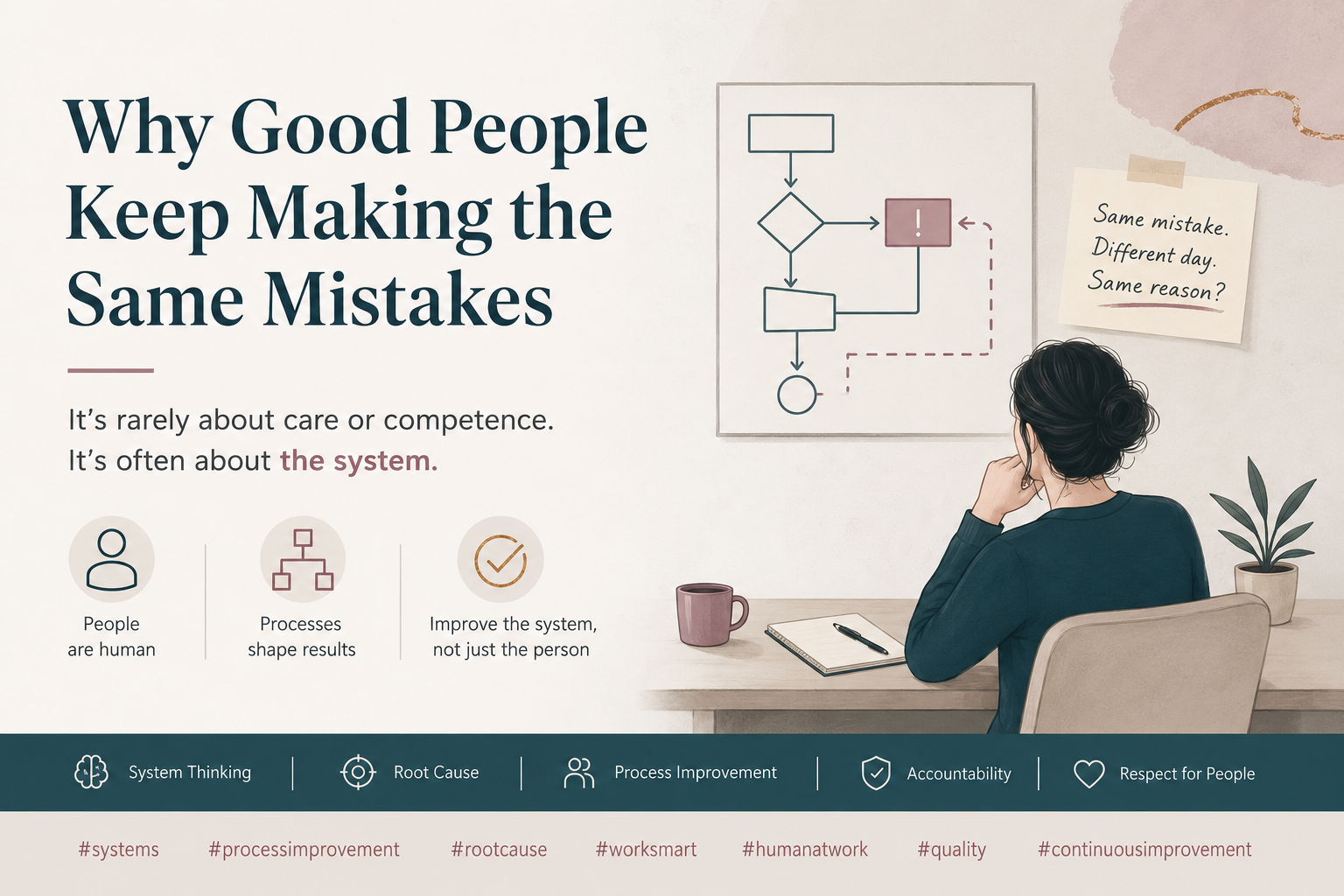
Why Good People Keep Making the Same Mistakes
When the same mistake happens again and again, we often start looking at the person. The first time, we accept it. Everyone makes mistakes. The second time, we may explain the task again. But after the third or fourth time, we start to wonder. Is the person careless? Did they forget the training? Are they…
-

The Workaround Is Trying to Tell You Something
Workarounds are common in almost every workplace. Someone keeps a separate spreadsheet because the system does not show the information they need. A team creates its own checklist because the official procedure is difficult to use. People send an extra email because they do not trust that the next step will happen without it. At…
-
A Process Can Be Efficient and Still Be Wrong
Efficiency is usually seen as a sign that a process is working well. Tasks are completed quickly, costs are controlled, people know what to do. There are few delays, and the numbers look good. But efficiency tells us how well a process performs. It does not tell us whether the process should exist in its…