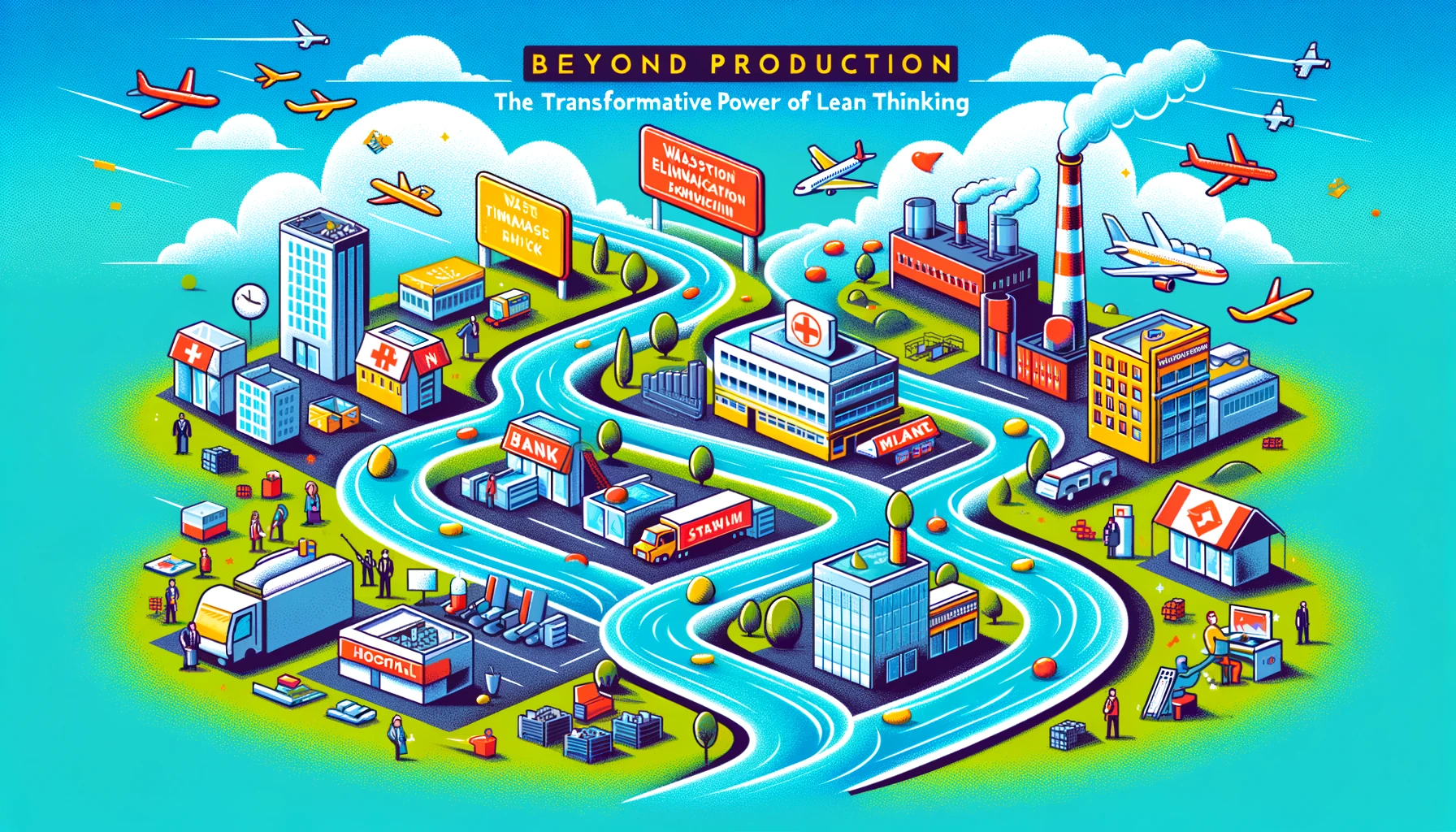
In the realm of business improvement methodologies, Lean Thinking stands tall as a transformative force. Often misconstrued as solely applicable to production, its principles extend far beyond factory floors. Let’s explore how Lean Thinking, with its focus on enhancing customer value, streamlining processes, and eliminating waste, can revolutionize industries, especially in the domain of services.
Lean Thinking Unveiled
Lean Thinking has been a game-changer in the healthcare sector, particularly in hospitals. Picture a hospital implementing Lean principles to streamline its patient care process. By thoroughly analyzing the patient journey, identifying pain points, and optimizing workflows, hospitals have not only reduced waiting times but have also significantly improved the overall quality of healthcare services. This transformation is a testament to the adaptability of Lean Thinking outside traditional manufacturing settings.
Tools of Lean Thinking in Services
In the financial sector, Lean Thinking tools have become indispensable for organizations seeking operational excellence. Let’s delve into a real-world scenario. A major bank faced challenges in customer service, with prolonged query resolution times. Applying the ‘5 Whys’ technique, the bank traced the root cause to inefficient internal communication. By addressing this fundamental issue, not only did the bank enhance customer satisfaction by resolving queries faster, but it also streamlined its internal processes, leading to improved overall efficiency.
Lean Beyond Production Lines
Turning our attention to the software development industry, Lean Thinking has left an indelible mark. Consider a software company adopting Lean principles to optimize its development processes. Through practices like automated testing, continuous integration, and efficient resource allocation, the company achieved less human effort, reduced defects, and a significant cut in investment. This example illustrates that the benefits of Lean extend beyond physical production lines, proving its efficacy in the digital landscape.
The Human Element in Lean
In the retail sector, Lean Thinking has empowered employees to actively contribute to process improvement. Imagine a retail chain implementing Lean principles to optimize its inventory management. By involving frontline staff in identifying inefficiencies and proposing improvements, the company not only reduced waste but also fostered a culture where employees felt valued and engaged. Far from a reduction in the workforce, Lean Thinking enhances the human element, turning employees into catalysts for positive change.
Redefining Success with Lean Thinking
Let’s take to the skies for an example from the airline industry. Airlines embracing Lean Thinking redefine success not merely as profitability but as the delivery of exceptional value to passengers. Through optimized flight schedules, reduced turnaround times, and minimized delays, these airlines prioritize a seamless travel experience. Success, in this context, is measured by customer satisfaction and operational efficiency, emphasizing that Lean Thinking transcends traditional success metrics.
How has Lean Thinking influenced your industry or work? Share your experiences and insights in the comments below. Let’s continue the conversation on how Lean can reshape the landscape of various sectors!