Structure is often associated with control. Rules, processes, procedures, approvals. For many people, these words trigger resistance because they are linked to past experiences of restriction rather than support. Structure is remembered as something imposed, something that limits autonomy instead of enabling it.
This interpretation is common, but it misses an important distinction. In practice, the absence of structure does not create freedom. It usually creates exposure.
In loosely structured environments, people are expected to navigate uncertainty on their own. Goals are broad, expectations are implicit, and priorities shift without much notice. On the surface, this can look like trust and autonomy. In daily work, it often feels like guessing. Decisions carry personal risk because the boundaries are unclear. Responsibility expands quietly, without a shared frame to hold it.
What is experienced as freedom slowly turns into pressure.
Structure changes this dynamic in a quiet way. When work is clearly framed, people no longer have to constantly interpret what is expected or protect themselves from invisible rules. Processes, roles, and decision spaces make the system visible. Instead of asking whether they are allowed to act, people can focus on whether their actions make sense for the work.
This is where freedom becomes usable.
I’ve seen teams described as highly autonomous struggle more than teams with clearer structure. Not because autonomy was wrong, but because it was unsupported. Without structure, autonomy demands constant vigilance. People hesitate, double-check, or escalate decisions simply to stay safe. What looks like independence from the outside often feels like exposure from the inside.
At the same time, I’ve seen well-structured environments offer people more real freedom. Decisions moved faster, not slower. Initiative increased, not decreased. The structure did not constrain action. It absorbed uncertainty, so people didn’t have to.
This is one of the most misunderstood effects of structure. When the system carries the rules, individuals don’t need to carry them in their heads.
It’s important to clarify what this is not about. Structure is not micromanagement. It is not constant oversight or rigid compliance. Those are signs of fear, not design. Micromanagement focuses on controlling people. Structure focuses on designing work so that judgment can be used safely.
Well-designed structure assumes competence. It sets clear boundaries so that autonomy can exist without anxiety.
Over time, this changes how work feels. Fewer clarifications are needed. Fewer decisions require escalation. Meetings become shorter because basic questions already have answers. Energy shifts from self-protection to problem solving. Work becomes calmer, not because expectations are lower, but because they are clearer.
This is also where responsibility becomes fair. When expectations are explicit and processes are visible, people know what they are accountable for and what is outside their scope. Ownership can be taken deliberately instead of defensively. Freedom stops being a personal risk and becomes a shared condition.
Control relies on monitoring.
Freedom relies on clarity.
In practice, the most autonomous environments I’ve seen were also the most structured. Not heavy with rules, but thoughtful about design. They invested time in making work understandable and predictable, so people could act without constantly seeking permission.
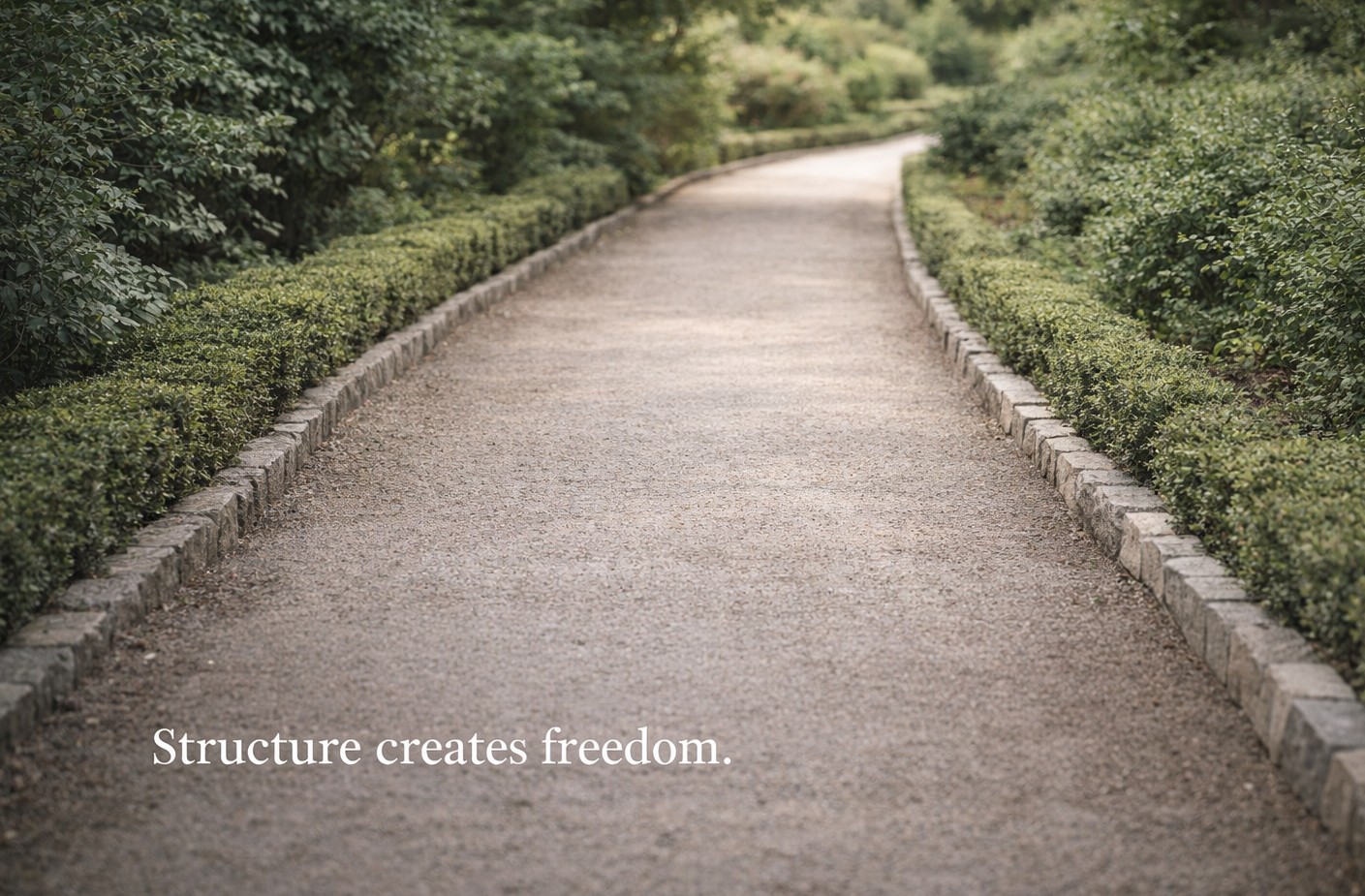
Structure did not limit freedom in those systems. It protected it.
Real freedom at work is rarely about the absence of limits. It comes from knowing where limits are, so attention and energy can be spent on what actually matters. Structure, when designed with that intention, is not the opposite of freedom. It is what makes freedom sustainable.