In many professional environments, visibility has quietly become a substitute for value. Work that is discussed often, presented clearly, and shared confidently is assumed to matter more than work that happens steadily, without commentary. Over time, this creates a distorted sense of progress, where attention is mistaken for impact and movement is mistaken for change.
What I have observed, repeatedly, across different roles and systems, is that the work that actually changes how things function is rarely the most visible. It is usually the most consistent.
There is a particular kind of progress that looks impressive and feels reassuring. It comes with initiatives, updates, alignment meetings, and constant communication. Something is always happening, something is always being explained. From the outside, this activity creates the impression of momentum. From the inside, it often creates fatigue and a vague sense that, despite all the effort, little is truly settling.
This is not because people are incapable or uncommitted. It is because visibility-oriented progress depends on attention to survive. When attention moves elsewhere, the progress moves with it.
The work that changes systems does not rely on being noticed. It relies on being repeated.
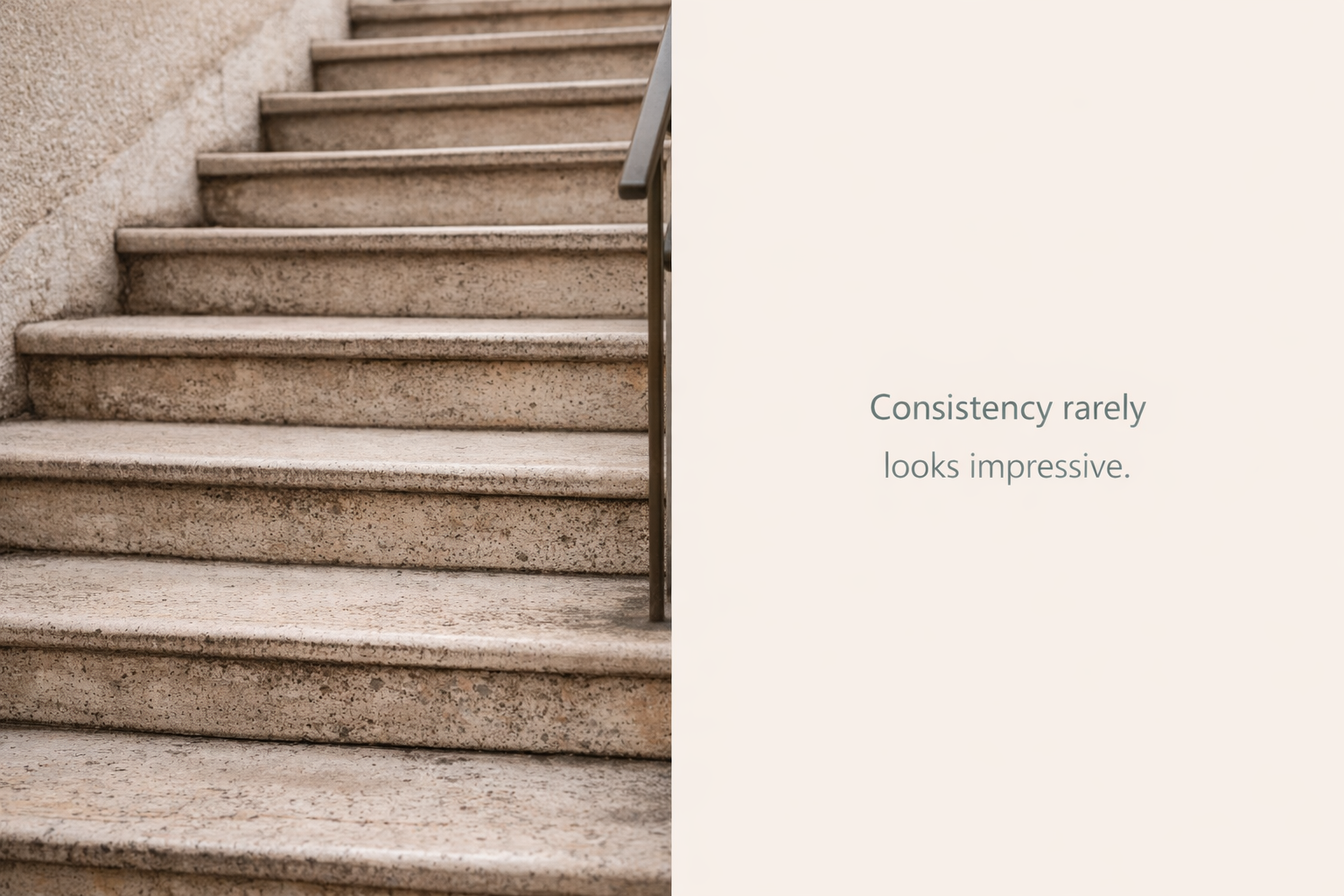
Consistency is rarely dramatic. It does not announce itself, and it does not offer immediate confirmation that it is working. It shows up in decisions that are made the same way even when pressure increases, in processes that are followed when shortcuts would be easier, and in standards that remain stable long after initial enthusiasm fades. This kind of work does not create memorable moments, but it reshapes everyday reality.
Consistency is also undervalued because it offers very little emotional reward. There is no clear milestone where effort is publicly validated. Doing the right thing repeatedly does not attract attention in the same way that introducing something new does. As a result, many environments drift toward novelty, not because novelty is more effective, but because it is more visible.
I have seen teams invest significant energy in change efforts that were well designed, clearly communicated, and initially embraced. For a period of time, language changed and intentions were aligned. Then daily pressure returned, priorities shifted, and the new ways of working slowly dissolved. Not through resistance, but through neglect. Without consistent reinforcement, even the best ideas revert to background noise.
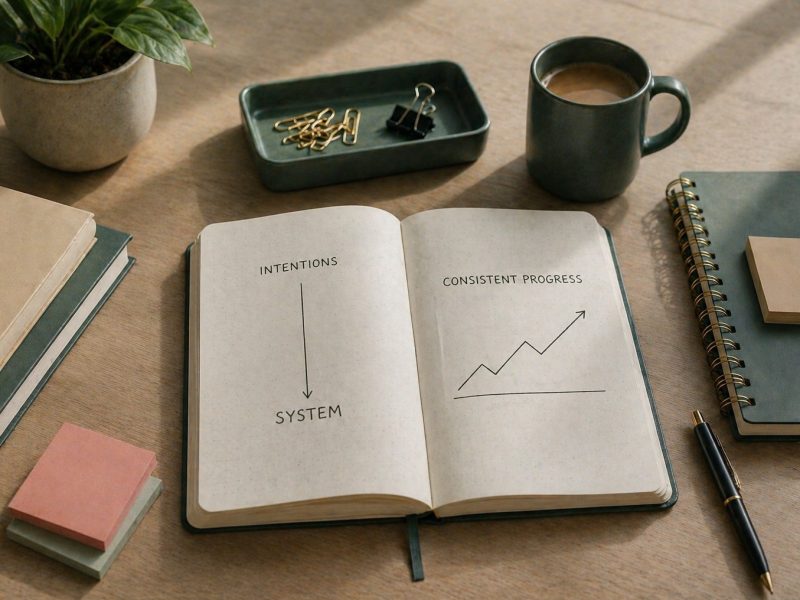
At the same time, I have seen modest changes endure for years without any formal launch. No presentation, no narrative, no visible push. Just a clear decision, applied consistently until it became the default. That is how systems actually change. Not through intensity, but through repetition.
Systems respond to what becomes normal. They are shaped less by what matters once and more by what is repeated without exception. This is true for processes, for decision-making, and for trust. Trust does not grow through statements or declarations. It grows through predictable behavior, experienced over time.
Quiet, consistent work also reduces the amount of energy required to operate. Fewer explanations are needed. The same problems stop resurfacing. Decisions take less emotional effort because expectations are clearer. Work becomes calmer, not because ambition has disappeared, but because the system is carrying more of the load instead of relying on people to compensate.
This is not an argument against communication or visibility. Some work needs explanation and shared language. But visibility without consistency creates fragility. When what is communicated is not reinforced daily, communication becomes noise. When what is announced is not protected over time, progress becomes temporary.
There is a form of leadership embedded in this kind of work, although it is rarely labelled as such. It appears in decisions that do not change with urgency, in boundaries that hold even when inconvenient, and in standards that remain intact under pressure. It depends on coherence, not performance.
For a reader living inside complex systems, this distinction matters. If work feels busy but unconvincing, if initiatives keep coming without ever settling, and if fatigue persists despite effort, the issue may not be individual capacity. It may be the kind of progress being pursued.
Quiet, consistent work does not just change outcomes. It changes how work feels to live inside. That difference compounds over time.